2026 World Cup Global Viewing Guide: Watch Commentary, Interviews, and Analysis Beyond Your Usual Broadcast
The 2026 World Cup is finally here, and for North American fans, the usual English broadcast is only one version of the tournament.
You might watch a match in English, then open YouTube and find a Spanish-language reaction clip that feels more intense than the goal itself. You might see a short X post where the commentary is moving faster than the subtitles. Or you might come across a post-match interview from a player, coach, or reporter speaking in a language you do not follow well.
The match is easy to understand.
The global conversation around it is not.
That is where AI translation becomes useful. Not as a replacement for official broadcasts, and not as a shortcut around rights or platform rules, but as a way to follow the World Cup stories that happen outside your usual feed: Spanish commentary, Latin American reactions, Portuguese tactical analysis, French-language interviews, international YouTube football analysis, TikTok clips, Instagram Reels, and post-match videos.
Use TranslateSub to translate World Cup videos when you have a public clip, post-match video, highlight, interview, or authorized file you are allowed to process.
Why the 2026 World Cup is a multilingual content event
The 2026 World Cup is hosted across the United States, Canada, and Mexico, which makes it feel local for North American fans and global at the same time. The stadiums may be closer, the time zones may be friendlier, and the English-language broadcast may be easy to access. But the tournament itself does not speak in one language.
Spanish-language commentary brings a different rhythm and emotional register. Latin American creators react to moments with cultural context that may not appear in a neutral broadcast. Canadian coverage may involve English and French media. Brazilian and Portuguese-speaking analysts can bring deep tactical vocabulary and football culture. International reporters often publish mixed-zone clips before those moments are fully subtitled.
That is why World Cup translation is not just about understanding the score. It is about understanding how different football cultures experience the same match.
Start with the World Cup subtitles translator page
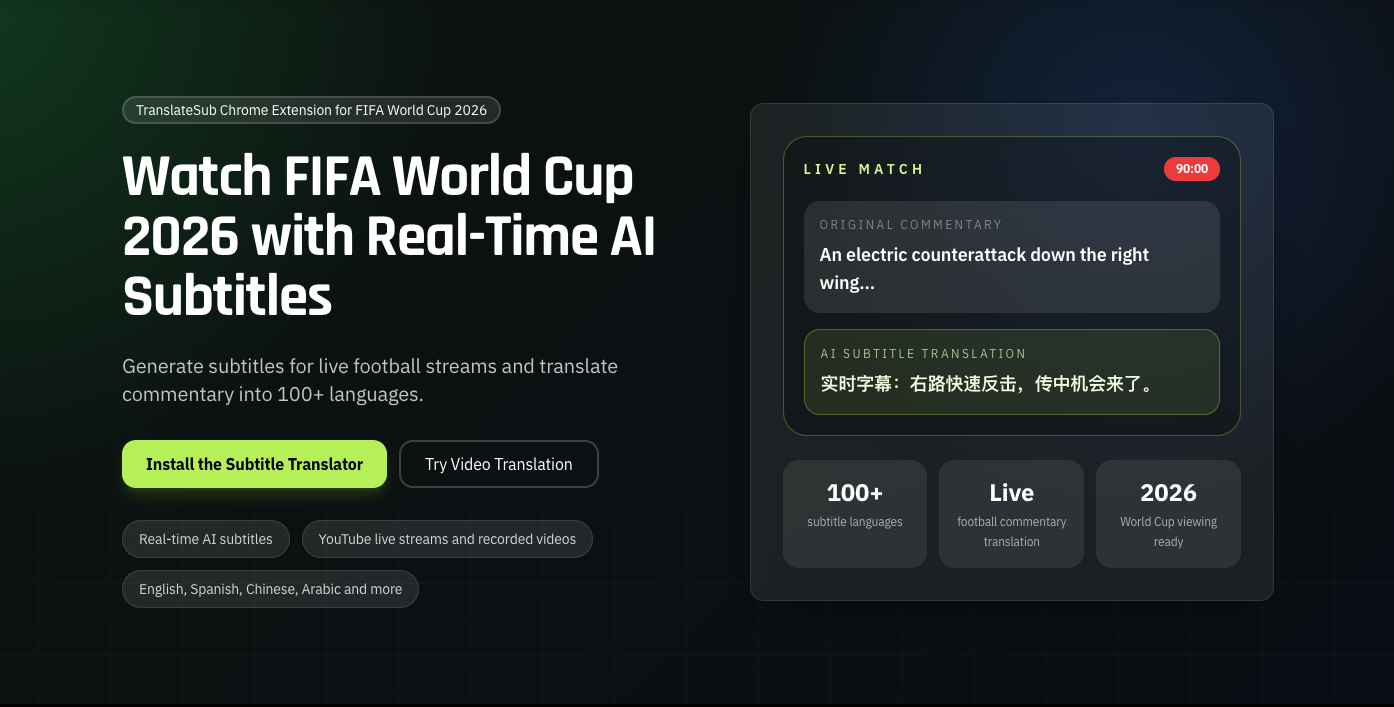
If your main goal is translating World Cup videos, highlights, interviews, or commentary clips, you can also start from TranslateSub's World Cup Subtitles Translator Extension.
That page is more tool-focused. This guide is the broader viewing guide: what kinds of World Cup content are worth translating, why they matter, and where AI translation fits without overstating what it can do.
The World Cup content worth translating
Not every World Cup clip needs translation. Some moments are obvious from the picture alone. The better question is: which global football content becomes more valuable once you can actually understand the language around it?
1. Spanish-language commentary
For many North American fans, Spanish commentary is part of the World Cup atmosphere. A goal call can feel more emotional, faster, and more communal than a neutral broadcast, especially when the clip comes from Mexican or Latin American media.
The point is not simply to rewatch the match. It is to understand the story behind the energy: the nicknames, the repeated phrases, the pressure in the commentator's voice, and the fan culture around the moment. AI translation can help turn that intensity into meaning, especially when a clip goes viral without full English subtitles.
2. Post-match interviews in different languages
Post-match interviews often carry the real explanation for what viewers just saw. Players, coaches, and reporters may speak English, Spanish, French, Portuguese, Arabic, or other languages depending on the team, media zone, and source account.
Short interview clips circulate quickly, but they often arrive without complete subtitles. A translated summary may appear later, but by then the quote has already been clipped, debated, and reshared. Translating the original video helps fans and creators understand tone, context, and what was actually said before turning it into a recap or post.
3. Portuguese and Latin American football analysis
Brazilian and Latin American football analysis often adds more than highlight commentary. It can bring cultural context, tactical vocabulary, player history, and a different sense of what matters in a match.
For fans who want more than highlight reels, this kind of international analysis is worth translating. A Portuguese tactical segment or a Latin American panel clip may explain pressing, spacing, substitutions, or emotional pressure in ways an English broadcast does not prioritize. AI translation makes those ideas easier to compare and reuse.
4. Fan reactions and short clips
World Cup fan reactions move fast. A TikTok clip, an Instagram Reel, a short X video, or a YouTube reaction may capture the mood of a city, a household, a bar, or a fan base before official subtitles exist.
These clips are not always polished, but they often show the tournament's emotional layer better than a formal recap. AI translation helps creators and fans understand them before the moment passes, especially when the audio includes slang, chants, mixed languages, or background noise.
Scenario 1: You hear commentary that feels bigger than the broadcast
A Spanish-language call, a Portuguese analysis clip, or a French commentary moment may spread because it sounds more alive than the version you first watched. Even when the play is clear, the language carries context: urgency, disbelief, humor, frustration, or local football memory.
The challenge is that commentary is not clean studio audio. It is fast, emotional, and full of names, nicknames, incomplete sentences, and tactical shorthand. Automatic captions may capture only part of it, and they often miss the rhythm of the moment.
AI translation helps when the clip is public, importable, or something you have permission to process. You can keep the original voice, generate English subtitles, and decide whether the clip is worth saving, sharing, or turning into commentary of your own.
Scenario 2: You want the full context of a post-match interview
Post-match interviews can change how a match is understood. A coach may explain a tactical switch. A player may describe pressure, travel, fatigue, or a missed chance. A reporter may ask a question that reveals the local media angle.
For English-speaking fans, the language gap can run in several directions. You may want to understand a Spanish interview from Mexican media, a French-language Canadian segment, a Portuguese Brazilian reaction, or a mixed-zone clip from an international reporter.
AI translation is helpful here because interviews need context, not just isolated quotes. With a translated subtitle draft, you can review the full answer, check names and football terms, and avoid relying only on a short recap post.
Scenario 3: You follow highlights, tactical breakdowns, and viral clips
The World Cup does not live only in the official highlight package. It also lives in tactical YouTube videos, creator breakdowns, short X clips from reporters, TikTok edits, Instagram Reels, fan reactions, and international media snippets.
These videos often move faster than professional subtitles. Some use burned-in captions. Some depend on auto captions. Some are edited so tightly that the key sentence disappears before you can pause.
AI translation turns those clips into something you can read, compare, and reuse. That matters for casual fans who want context, bilingual households watching together, and sports creators building recaps while the conversation is still active.
How AI translation helps without replacing the broadcast
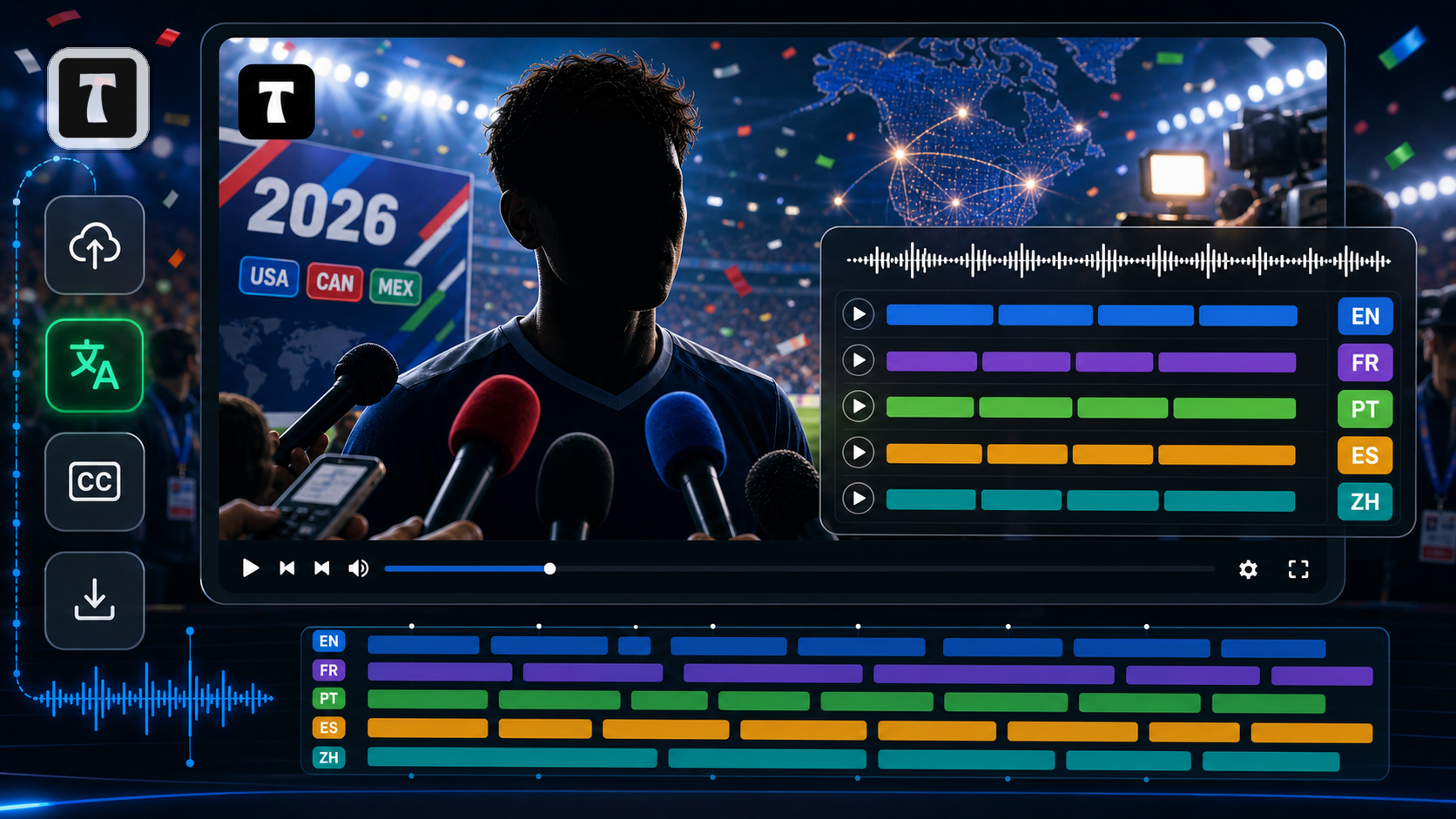
AI translation is most useful when you treat it as a viewing aid, not as a replacement for official World Cup coverage. It helps you understand clips, interviews, highlights, and analysis that sit around the match broadcast.
It can help you catch the meaning of a Spanish commentary clip, turn a French interview into readable English subtitles, compare Portuguese analysis with an English recap, or save a viral fan reaction for later. It is especially useful when the content is short, public, authorized, or already available as a video file you can upload or import.
It still needs judgment. Names, teams, formations, score references, idioms, jokes, and emotional tone should be reviewed before publishing or quoting. For creators, AI translation can speed up the first pass. It does not replace editorial responsibility.
How TranslateSub fits into this workflow
Use this workflow for post-match videos, public clips, your own recordings, authorized files, creator footage, highlights, interviews, analysis videos, and importable content. Keep copyright and platform rules in mind, especially around full-match broadcasts and protected live streams.
Upload or import the video. Start with a post-match interview, commentary clip, tactical breakdown, highlight, or creator video you are allowed to process.
Choose the source language or use auto-detect. Common World Cup sources may include Spanish, English, French, Portuguese, or mixed-language audio.
Choose English as the target language, or keep bilingual subtitles if you want to compare the original with the translation.
Generate subtitles or translated subtitles. Let TranslateSub create an editable draft.
Review football context. Check player names, team names, formations, score references, idioms, and tactical terms.
Export the result. Use SRT, VTT, or text for replay notes, content planning, editing, studying, or publishing workflows.
This keeps TranslateSub in the right role: a practical subtitle and translation workflow for World Cup videos you are allowed to process, not a promise that every live broadcast can be translated directly.
Who gets the most value from this workflow
Casual soccer fans can go beyond the main English broadcast. If a Spanish call, French interview, or Portuguese tactical clip is the version everyone is sharing, translation gives you a way in.
Bilingual households can make matchday more inclusive. One person may want the original Spanish audio, another may prefer English subtitles, and both can follow the same clip together.
Sports creators can move faster. Instead of manually transcribing every interview or reaction video, they can generate subtitle drafts, review key moments, and build recap scripts with more confidence.
Fans who follow international media can compare how U.S., Canadian, Mexican, Latin American, European, and global outlets frame the same World Cup moment.
Coming next in this World Cup translation series
This guide is the entry point for a broader World Cup translation series. As the tournament continues, we will expand it with practical guides for specific viewing and creator workflows.
How to translate Spanish football commentary during the World Cup
How to translate post-match interviews into English
Best tools for adding subtitles to World Cup highlights
AI sports video translation guide: from commentary clips to post-match analysis
World Cup subtitles translator tool
FAQ
Can AI translation help with live World Cup commentary?
Yes, but with limits. AI translation can help with public commentary clips, replay segments, authorized files, and importable videos you are allowed to process. It should not be treated as a way to directly translate every copyrighted live broadcast on every platform. For World Cup viewing, the safer use case is translating clips, post-match videos, and replay material after the moment is available in a file or supported source. TranslateSub fits that workflow by generating subtitles and translations for video content you can legitimately upload or import.
Why translate World Cup content if I already have an English broadcast?
An English broadcast can explain the match, but it is only one version of the tournament. Spanish commentary, Latin American reactions, Portuguese tactical analysis, French interviews, and international media clips often carry emotion and context that do not appear in your usual broadcast. For North American fans, the 2026 World Cup is also a chance to follow how Mexico, Brazil, Canada, Europe, and global football communities talk about the same moment. AI translation helps you follow those perspectives without waiting for someone else to summarize them in English.
What types of World Cup videos are worth translating?
The best candidates are videos where language adds real value: Spanish-language commentary, post-match interviews, press conference clips, tactical analysis, public highlights, fan reactions, and creator breakdowns. These clips often spread quickly and may not have full English subtitles when fans first see them. If the video is public, authorized, owned by you, or otherwise allowed to process, TranslateSub can help create a subtitle draft. You should still review player names, team names, quotes, formations, idioms, and football terms before publishing, quoting, or turning the clip into your own recap.
Can I translate Spanish commentary, Portuguese analysis, and French interviews into English?
Yes. Those are exactly the kinds of multilingual World Cup videos where AI translation can be useful. You can use Spanish, Portuguese, French, or another available source language, then translate the subtitles into English. This is especially helpful when a clip is emotional, fast, tactical, or full of local football references that do not travel well without context. For best results, keep the original alongside the translation and review player names, place names, formations, idioms, jokes, and emotionally charged phrases before relying on the subtitles publicly.
Is AI translation useful for sports creators covering the World Cup?
Yes, especially for first-pass research and editing. Sports creators can use AI translation to understand international clips, prepare quote notes, compare reactions, and decide which moments deserve a recap, short-form edit, newsletter, or analysis post. It can save time when several interviews or reaction clips appear at once during a busy matchday. It does not remove the need to verify context, check the original audio, or respect rights. TranslateSub is most useful when creators work with public, authorized, or owned World Cup video material.
Final
The next time a Spanish commentary clip, a French interview, or a Latin American post-match reaction appears in your feed, do not skip it just because it is not in English.
Some of the most interesting World Cup stories happen outside your usual broadcast.
Use TranslateSub to translate World Cup videos, understand the moment, and decide what is worth saving, sharing, or turning into your own analysis.