The Power of AI Translation: How Machine Learning is Transforming Global Communication
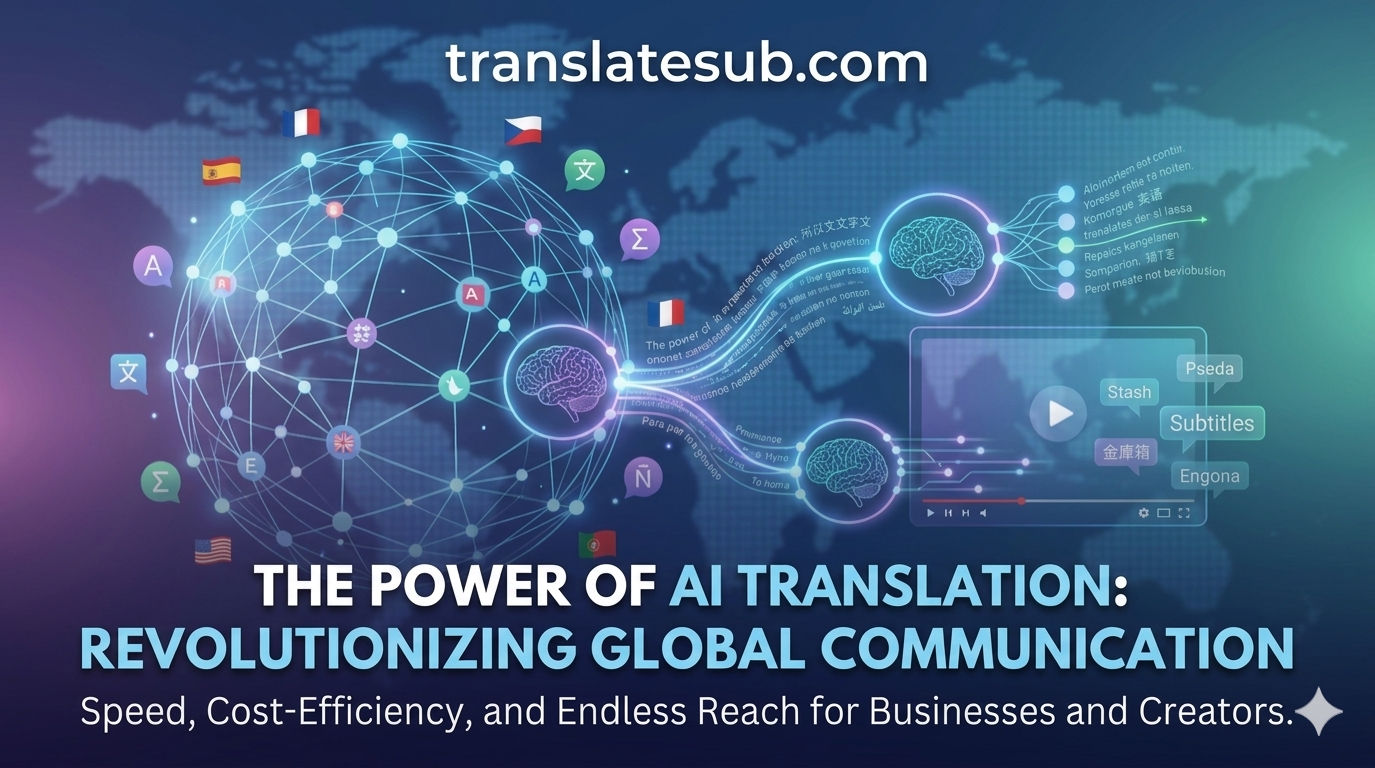
In today’s digital-first world, cross-language communication is no longer a luxury—it’s a prerequisite for growth. Whether you are scaling an international enterprise or a solo content creator, language barriers represent lost revenue. AI-powered translation is the solution, turning what used to be weeks of manual labor into seconds of automated precision.
1. Scaling Operations in Emerging Markets
Expanding into new territories often fails not because of the product, but because of the communication gap. Modern businesses are now using AI to bypass the high cost of traditional agencies.
Real-World Application: For an e-commerce platform entering Eastern Europe or the Middle East, the ability to translate english to albanian for customer support or generate english to bulgarian product descriptions is a game-changer. When dealing with complex scripts, a reliable english to persian language translator ensures that marketing slogans retain their cultural impact rather than becoming a "lost in translation" disaster.
2. The Content Creator’s Global Lever
For creators on platforms like YouTube or TikTok, AI is the ultimate multiplier for reach and engagement.
Localized Growth: A travel vlogger can use google translate vietnamese to english to engage with international fans, or localize their entire channel for the Hanoi market by using english to vietnam language subtitling tools.
Tapping Into New Audiences: Forward-thinking influencers are now using AI to translate english to swahili to reach the booming digital populations in East Africa, or applying english language translate to korean to tap into the massive Hallyu wave global audience.
3. Precision in Specialized and Rare Dialects
The true strength of AI translation, integrated into platforms like TranslateSub, lies in its ability to handle technical nuances and rare linguistic pairs that were once overlooked.
Scenario-Based Examples:
Education & Science: AI isn't just for prose; it handles translation math and technical jargon with increasing accuracy, aiding researchers worldwide.
Humanitarian Efforts: During crisis response, tools like a haitian creole translator provide essential communication links for aid workers on the ground.
Cultural & Heritage Projects: Scholars utilize english to ivrit translation and english to hebrew translation to bridge ancient texts with modern understanding, while regional developers use english to icelandic or english to welsh to maintain localized digital experiences.
4. Navigating Cultural Nuance
AI has moved beyond word-swapping to "context-awareness." This is vital when dealing with languages that have distinct formal and informal structures.
When a brand needs to translate into urdu or provide english to sinhala documentation, the AI accounts for regional syntax. In the complex hindi vs english landscape, modern NLP (Natural Language Processing) identifies "Hinglish" patterns to make the output feel authentic. This same precision applies whether you are performing a high-stakes english to mandarin translation for a boardroom or a community-focused english to samoan translation for local outreach.
Why AI Integration is Non-Negotiable
Speed is the new currency. By the time a manual translator opens a dictionary, an AI-powered creator has already used translate hindi to english to analyze market trends or deployed tra anglais arabe to break news in the Middle East.
AI translation doesn't just change how we speak; it changes how fast we can grow. Using these tools is no longer about "cutting corners"—it's about removing the ceiling from your global potential.
What is AI Translation?
AI translation, also known as machine translation, uses artificial intelligence to automatically convert text or speech from one language to another. Unlike traditional translation methods, AI systems rely on machine learning and neural networks to understand context, tone, and intent.
Modern tools such as TranslateSub leverage neural machine translation (NMT) to deliver more natural and accurate results. Instead of translating word-by-word, NMT processes entire sentences, ensuring the meaning is preserved.
The Engine Behind the Magic: How Modern AI Models Redefine Translation
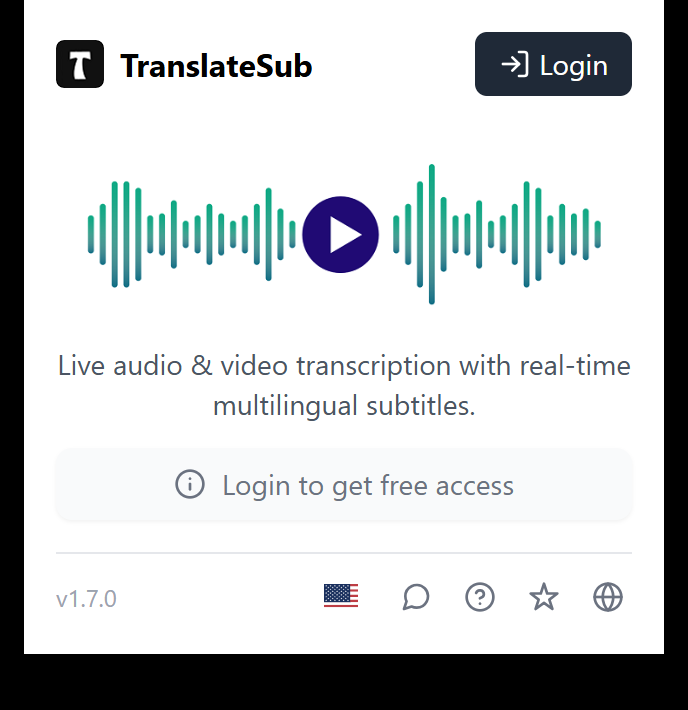
The "robotic" translations of the past are dead. Today’s landscape is dominated by Large Language Models (LLMs) that don't just swap words—他们 simulate human reasoning. Whether you are using a tool like TranslateSub to localize a YouTube documentary or translating a technical whitepaper, here is the tech making it happen:
1. From Patterns to Reasoning: The Rise of LLMs
Traditional Machine Learning has evolved into Massive Multimodal models. We are no longer limited to simple databases; we are using sophisticated engines like Alibaba’s Qwen 2.5, which excels at multilingual nuances, and Elon Musk’s Grok-3, known for its real-time understanding of slang and internet trends.
Case Study: YouTube Video Localization Imagine a tech reviewer wanting to translate hindi to english for a global audience. Older models would struggle with the "Hinglish" slang. However, using a hindi vs english optimized model allows the AI to recognize "code-switching" (mixing languages) in real-time, ensuring the subtitles feel authentic to a viewer in New York or London.
2. Deep Context via Neural Machine Translation (NMT)
NMT has shifted from "sentence-by-sentence" to "entire-context" processing. Models like Gemini 1.5 Pro and GPT-4o can hold thousands of lines of dialogue in their "working memory" (context window).
Real-World Impact:
Complex Scripts: If you need to translate into urdu or handle an english to sinhala project, NMT ensures the poetic flow of the script isn't lost.
Flow & Tone: When converting english to icelandic or english to welsh, the AI maintains the formal or informal tone required for the specific audience, preventing the "uncanny valley" effect in dubbed videos.
3. NLP & Cultural Intelligence: The "Slang" Filter
Natural Language Processing (NLP) is the layer that handles the "human" side of communication—idioms, sarcasm, and regional metaphors.
Regional Reach: A creator looking to translate english to swahili for an East African vlog needs more than a dictionary; they need the AI to understand local metaphors.
Niche Markets: This technology is what makes an english to samoan or english to bulgarian translation sound like it was written by a local, not a bot. It’s the same tech that allows for high-accuracy english to ivrit translation or the delicate phrasing found in english to hebrew translation.
4. Real-Time Multimodal Workflows
The most exciting breakthrough is Multimodal Translation—the ability to process audio, text, and visuals simultaneously.
For Video Creators: You can now take a video and translate english to albanian while keeping the original speaker's voice clone intact.
For Business: Instead of just a text file, an english to persian language translator can now analyze the tone of a CEO’s speech to ensure the Persian output carries the same authority. This is equally vital for high-stakes markets requiring english to mandarin translation or specialized fields like translation math, where one wrong symbol ruins the entire equation.
The Bottom Line
Whether it's a quick google translate vietnamese to english search for a travel vlog or a professional english language translate to korean marketing campaign, the convergence of Qwen, Grok, and NMT means the "Language Barrier" is officially a thing of the past. Using a haitian creole translator or an english to vietnam language engine is no longer a gamble—it’s a precision tool for global influence.
Key Benefits of AI Translation
⚡ Speed and Efficiency: AI translation can process thousands of words in seconds. This is especially useful for translating subtitles, localizing websites, and handling large-scale content.
💰 Cost-Effective Solution: Hiring professional translators can be expensive. AI tools significantly reduce costs, making multilingual content accessible for startups and small businesses.
🌍 Global Reach: With AI translation, businesses can easily expand into international markets by offering content in multiple languages.
📈 Scalability: AI tools can handle growing content demands without increasing operational complexity.
Real-World Use Cases
1. Video Subtitles and Content Localization
AI tools like TranslateSub make it easy to translate subtitles for videos, helping creators reach global audiences on platforms like YouTube.
2. E-commerce Translation
Online stores use AI translation to localize product descriptions, reviews, and customer support content.
3. Social Media and Marketing
Brands translate ads, posts, and campaigns to engage users across different regions.
4. Education and Online Learning
Courses and learning materials can be translated instantly, making education more accessible worldwide.
Challenges of AI Translation
Despite its advantages, AI translation still faces some limitations:
Context complexity in certain languages
Difficulty with idioms and slang
Occasional grammar inaccuracies
However, platforms like TranslateSub are continuously improving by combining AI with human feedback, resulting in more reliable and context-aware translations.
Why Choose AI Translation Tools Like TranslateSub?
TranslateSub stands out by focusing on practical use cases such as subtitle translation and content localization. It provides:
Fast subtitle translation for videos
Multi-language support
User-friendly interface
High-quality AI translation output
For content creators and businesses alike, it’s a powerful tool to scale globally without heavy costs.
The Future of AI Translation
The future of AI translation is incredibly promising. With advancements in speech-to-text translation, real-time translation apps, and multimodal AI (text + audio + video), we are moving toward a world where language barriers disappear completely.
AI will not replace human translators entirely, but it will enhance productivity and make global communication seamless.
Conclusion
AI translation is transforming how we communicate across languages. It offers unmatched speed, scalability, and affordability, making it an essential tool in today’s global landscape.
Reference
How to Convert Audio to Text and Video to Text Using AI: A Complete Guide with TranslateSub
Effortlessly Add Subtitles to TikTok and Xiaohongshu Videos with TranslateSub
Step by Step Guide to Generate, Translate, and Edit YouTube Subtitles
How to Download YouTube Video Transcripts
How to Free Download YouTube Videos with Closed Captions in 3 Simple Steps
Ready to break language barriers?
Whether you're a business expanding internationally or a creator reaching new audiences, TranslateSub can help you unlock new opportunities.