Why So Many Fans Watch Spanish World Cup Commentary — Even When They Don’t Speak Spanish
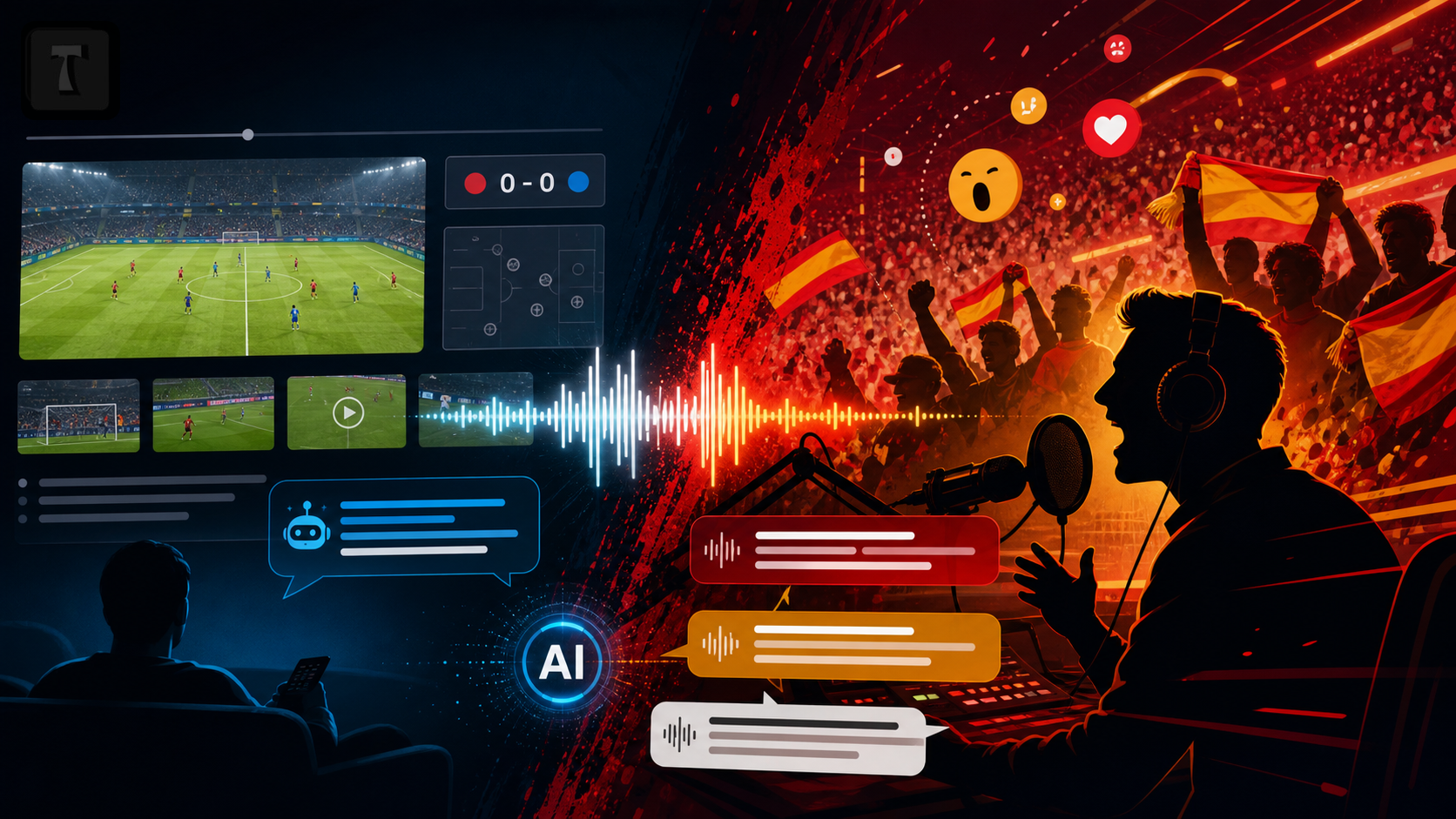
My World Cup predictions did not make it very far.
Spain were one of those teams many fans expected to handle their opening match without too much drama. Then the match finished 0-0 against Cape Verde.
For a few seconds, the group chat went quiet.
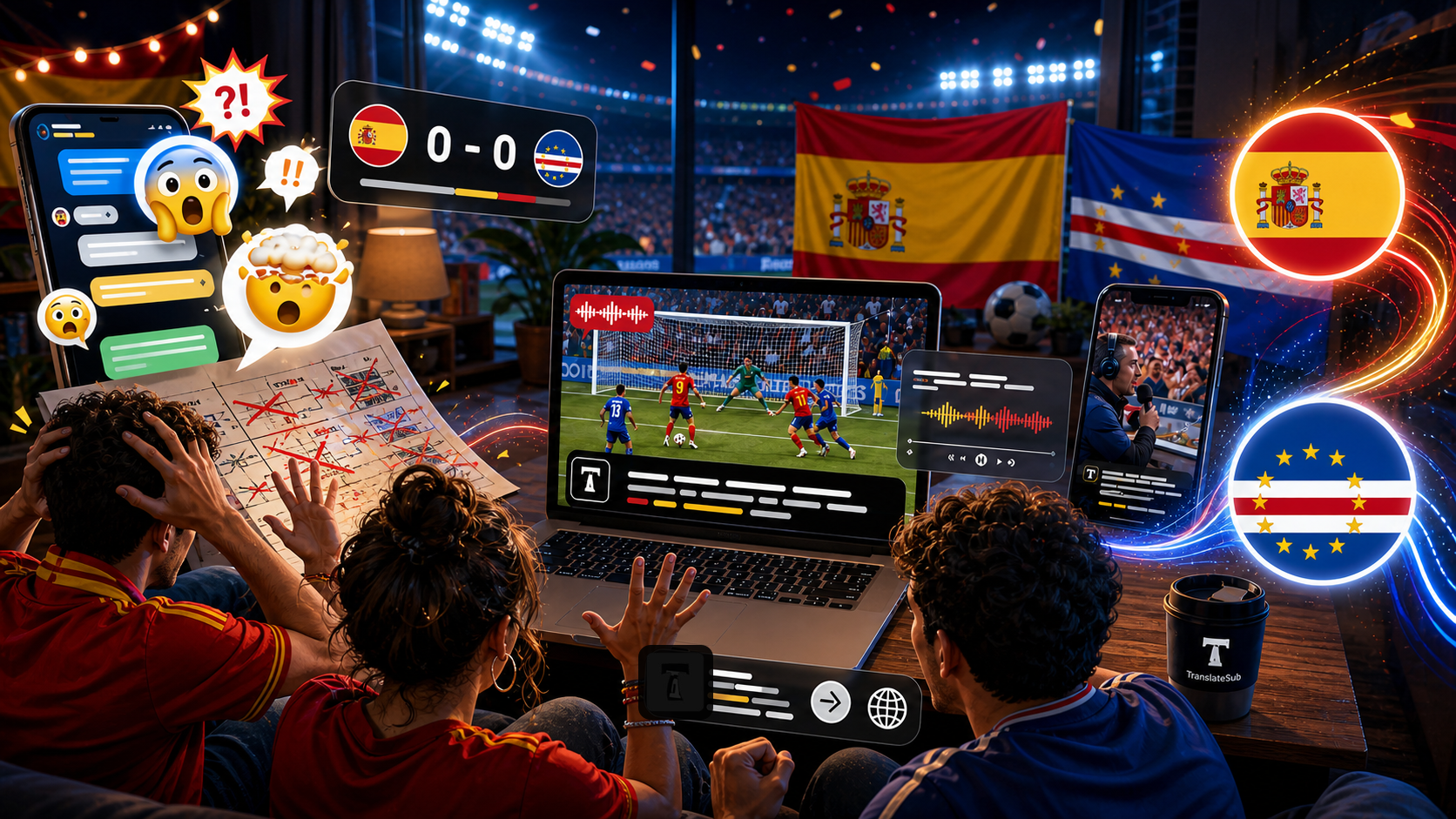
Then it became exactly the kind of group chat the World Cup creates: people joking that their picks were already ruined, someone saying the bracket suddenly looked fragile, someone else asking where the Spanish commentary clip was.
The scoreline was quiet.
The reaction was not.
That is the part of the World Cup that does not fit neatly into a highlight package. When a result surprises people, fans do not only look for the table, the stats, or a clean recap. They look for the sound of the moment: commentators reacting in real time, journalists trying to explain it, supporters laughing or panicking, and local media asking the questions everyone else is thinking.
Spanish World Cup commentary has become part of that search. Many fans who do not speak Spanish still watch it because they can feel that something is happening before they fully understand it.
And then comes the obvious question: what are they actually saying?
For many non-Spanish speakers, that is the moment they start looking for a way to translate Spanish commentary without losing the emotion that made the clip worth watching.
If you are interested in how fans follow commentary, interviews, highlights, and international reactions throughout the tournament, our World Cup Global Viewing Guide explores the broader multilingual side of the 2026 World Cup.
Why Spanish World Cup Commentary Feels Different
Spanish World Cup commentary is not "better" than English commentary. That is not the point. It feels different.
The rhythm is different. The emotional range is different. The space between description, memory, humor, frustration, and celebration is often much smaller. A commentator can sound like a reporter, a fan, a historian, and a neighbor in the same minute.
That style comes from football culture as much as language. In many Spanish-speaking countries, football is not only a sport you watch. It is a shared public mood. Commentary carries that mood. It can make a routine pass feel tense because the context around the match is tense. It can make a missed chance feel heavier because everyone knows what the team was expected to do.
For fans outside that language, the appeal is not always the literal meaning at first. It is the pulse. You hear the speed change. You hear disbelief arrive before the replay. You hear the commentator trying to decide whether this is funny, alarming, historic, or all three.
That is why a Spanish clip can travel even when most of the audience cannot translate every sentence.
Why Fans Look for Spanish World Cup Commentary After a Surprise Result
Surprise results change what people look for.
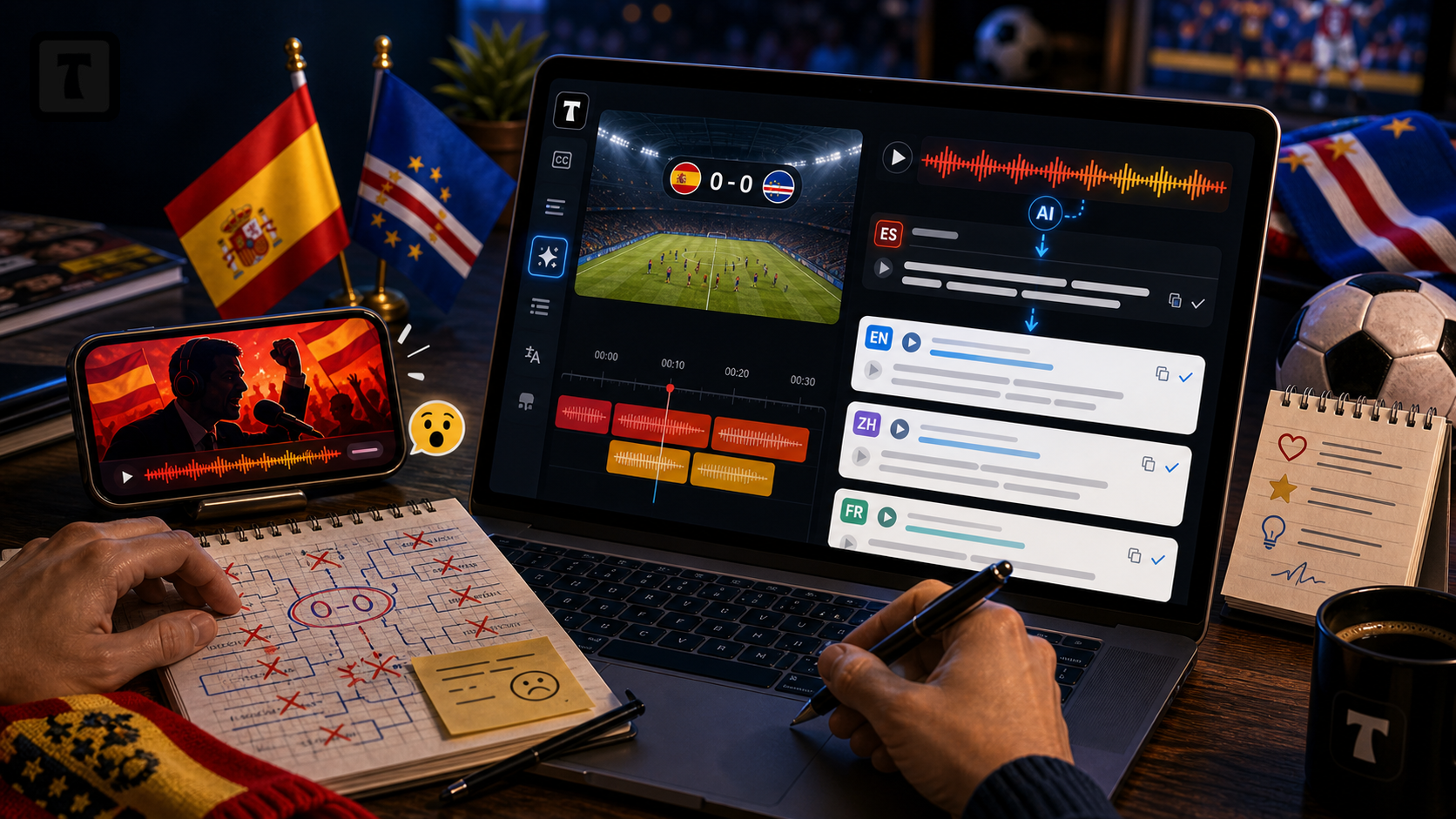
When a favorite wins comfortably, most fans move on with a quick highlight package. But when a match refuses to follow the script, the internet starts asking different questions.
The most interesting World Cup reactions are often not polished recaps. They are the first comments, the first nervous laughs, and the first attempts to explain why the prediction suddenly looked wrong.
How did the commentators react?
Were local journalists worried, angry, calm, or amused?
Did supporters see it coming, or did everyone realize at the same time that the easy prediction was gone?
Spain's 0-0 draw with Cape Verde is useful here not because it needs a tactical essay, but because it shows the pattern. A quiet scoreline can create loud reactions. People who had made confident picks suddenly wanted to know how Spanish-language media, Spanish fans, neutral observers, and international creators were framing the result.
That is where Spanish World Cup commentary becomes more than background noise. It becomes cultural evidence. Spanish commentary clips show how a football community processes surprise in real time.
What Gets Lost in Highlight Summaries
Highlight summaries are useful. They show the chances, the saves, the near misses, and the final score. But they often flatten the emotional story.
They can miss the joke a commentator makes after the fifth blocked shot. They can cut away from the silence after a final whistle. They can remove the disbelief from a local journalist's question. They can turn a tense, awkward, funny, uncomfortable football moment into a clean thirty-second package.
World Cup culture lives in those details.
The disappointment matters. The jokes matter. The nervous laughter matters. The way a commentator says "this was not supposed to happen" without saying it directly can tell you more than a graphic.
That is why fans go looking for original-language clips after a strange result. They are not only checking what happened. They are trying to understand how it felt to the people closest to the story.
The Spanish World Cup Content Worth Translating
Not every Spanish World Cup clip needs translation. Some moments work because of sound, face, and timing alone. But some clips become much richer once you understand the words.
Spanish commentary clips are worth translating when the emotion is tied to analysis, not just volume. The best clips often include a shift in tone: confidence becoming doubt, disbelief turning into humor, or a commentator realizing the match is no longer following the expected script.
If you regularly watch Spanish commentary clips, interviews, or post-match analysis, the World Cup subtitles translator page covers additional tools and workflows for multilingual World Cup content.
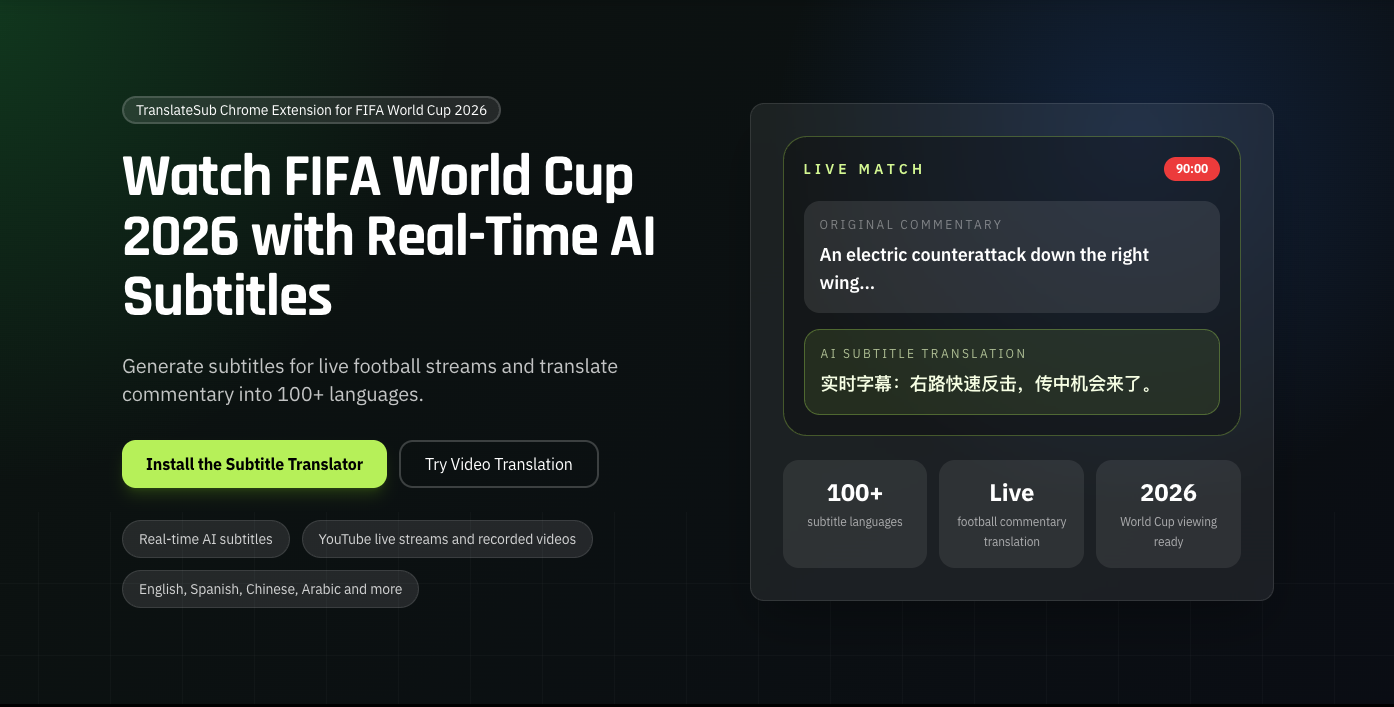
Reaction videos are worth translating because fans often say the unscripted part out loud. They joke, complain, argue, celebrate, and exaggerate in ways that reveal the mood around a team.
Post-match interviews are worth translating because they can explain pressure without turning the article into a match report. A player or coach might not say anything dramatic, but the tone and wording can still matter.
Local media analysis is worth translating because it shows what the story means inside the football culture that is closest to it. A neutral recap can tell you the result. Local media can show you why the result feels bigger than the number.
Press conferences are worth translating when a short clip is being discussed everywhere but the full question and answer are hard to find in your language.
How AI Translation Helps Without Replacing the Original Atmosphere
AI translation helps with the second layer of understanding.
The first layer is the original atmosphere: the voice, the speed, the tension, the laugh, the pause, the almost theatrical way football can turn into public emotion. You do not want to erase that. A translated subtitle should not make Spanish commentary feel flat.
The second layer is meaning. What was the joke? Was the commentator criticizing the performance, defending the team, or simply trying to process a strange result? What did the journalist ask? What did a supporter say that made the clip travel? This is where AI translation for football videos can make Spanish football commentary easier to follow without muting the original sound of the moment.
AI subtitles can help you answer those questions, especially when the video is short, public, authorized, or something you have permission to process. They are a starting point, not the final word. Names, idioms, slang, football terms, and emotional phrasing should still be reviewed before quoting or publishing.
The best use of AI translation is not to replace Spanish football culture. It is to let more people understand why the clip mattered in the first place.
TranslateSub Use Case
For World Cup videos, keep the workflow simple.
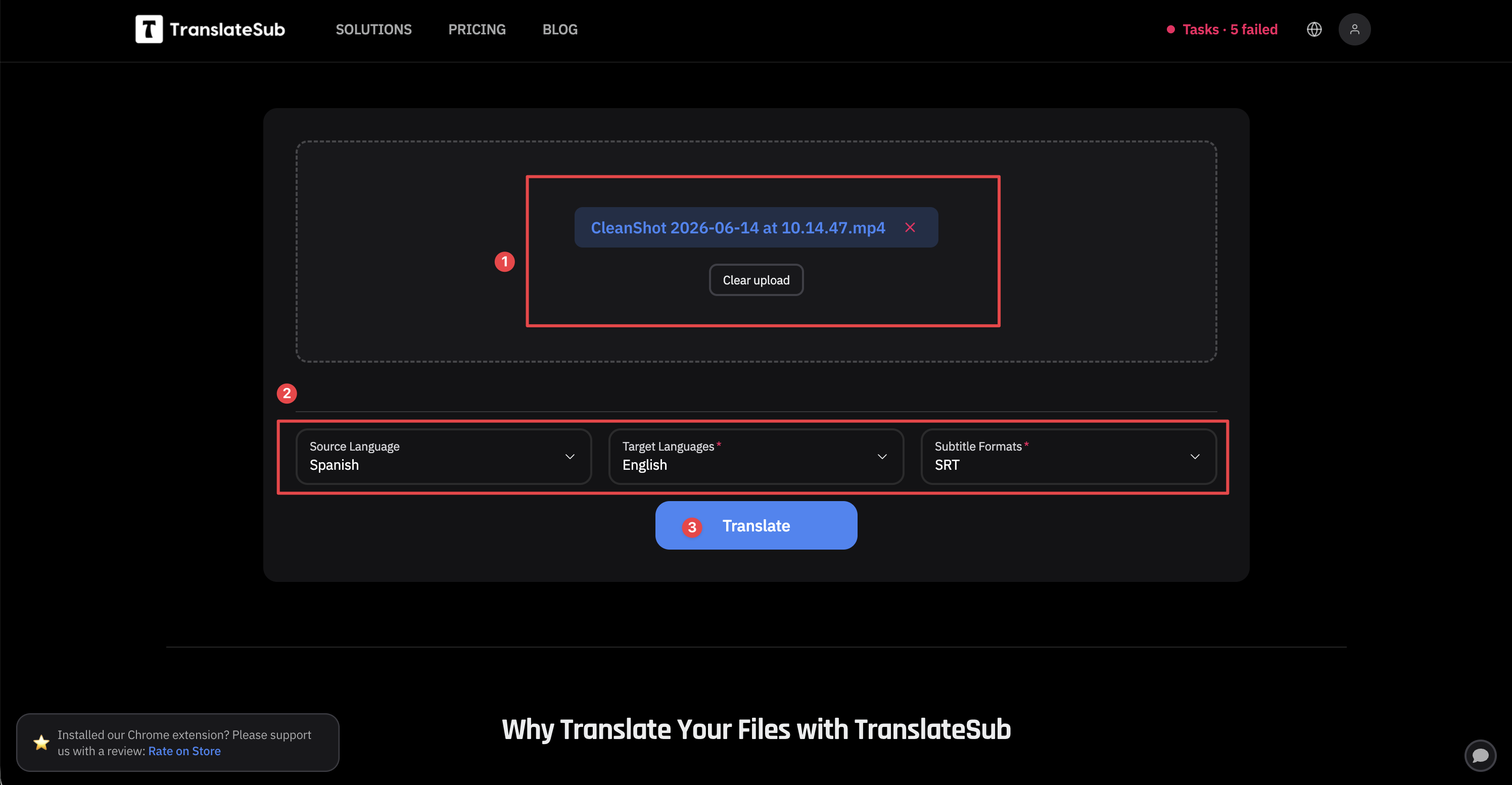
Upload or import a Spanish commentary clip, reaction video, interview, press conference segment, or media analysis video that you have permission to process.
Let TranslateSub detect Spanish, or choose Spanish as the source language.
Choose your target language.
Generate subtitles or translated subtitles.
Review the key moments: names, football terms, jokes, emotional phrases, and any lines you plan to quote or reuse.
Export the subtitle file or text for replay notes, content planning, editing, or your own analysis.
This is most useful for clips, post-match videos, public material, creator footage, and authorized files. It should not be treated as a promise that every copyrighted live broadcast can be translated directly.
Coming next in this World Cup translation series
This article is part of a broader World Cup translation series about how fans and creators follow the tournament across languages.
How to Translate Post-Match Interviews During the World Cup
Best Tools for Adding Subtitles to World Cup Highlights
AI Sports Video Translation Guide
FAQ
Why do people watch Spanish commentary if they do not speak Spanish?
Because commentary is not only information. It is emotion, rhythm, culture, and timing. Even when fans do not understand every word, they can hear surprise, frustration, joy, disbelief, and pressure. During the World Cup, that emotional layer often travels faster than official summaries. After a surprising result, fans want to feel how the moment landed in another football culture. Translation helps with the next step: understanding what was actually said.
Can AI translation help with Spanish World Cup commentary?
Yes, especially for short clips, reaction videos, interviews, and public or authorized material you can upload or import. AI translation can generate subtitles so you can follow the meaning behind a fast Spanish clip. It is still worth reviewing the result, because football commentary often includes names, slang, jokes, idioms, and emotional phrasing. TranslateSub can help create the first subtitle draft, but the final interpretation still needs human judgment.
Is Spanish commentary better than English commentary?
Not necessarily. A better way to say it is that Spanish commentary often feels different. English commentary may be calmer, more analytical, or more restrained depending on the broadcaster. Spanish commentary may feel faster, more emotional, or more communal depending on the country and source. The value is in comparison. Watching both versions can show how different football cultures react to the same World Cup moment.
What Spanish World Cup videos are worth translating?
The best candidates are videos where language carries context: commentary clips after a surprise result, local media reactions, post-match interviews, press conference moments, supporter reaction videos, and analysis clips. If the video is only a visual highlight, translation may not add much. But if people are joking, questioning, explaining, or reacting strongly, translated subtitles can help you understand why the clip matters.
Can creators use translated football videos?
Creators can use translation as a research and editing aid, but they still need to respect rights and verify context. A translated subtitle draft can help identify quotes, organize a recap, compare media reactions, or decide whether a clip is worth discussing. It does not automatically grant permission to reuse copyrighted footage. Use public, owned, authorized, or properly licensed material, and review translations carefully before publishing.
The Score Tells You What Happened. The Commentary Tells You How It Felt.
The next time a Spanish commentary clip, fan reaction, or post-match interview appears in your feed, you do not have to scroll past it just because it is not in English.
TranslateSub can help you understand the context behind the reaction while keeping the original atmosphere intact.
Use the TranslateSub Chrome Extension to translate Spanish World Cup videos, follow the reaction, and decide what is worth saving, sharing, or turning into your own analysis.