Why World Cup Post-Match Interviews Are Worth Translating
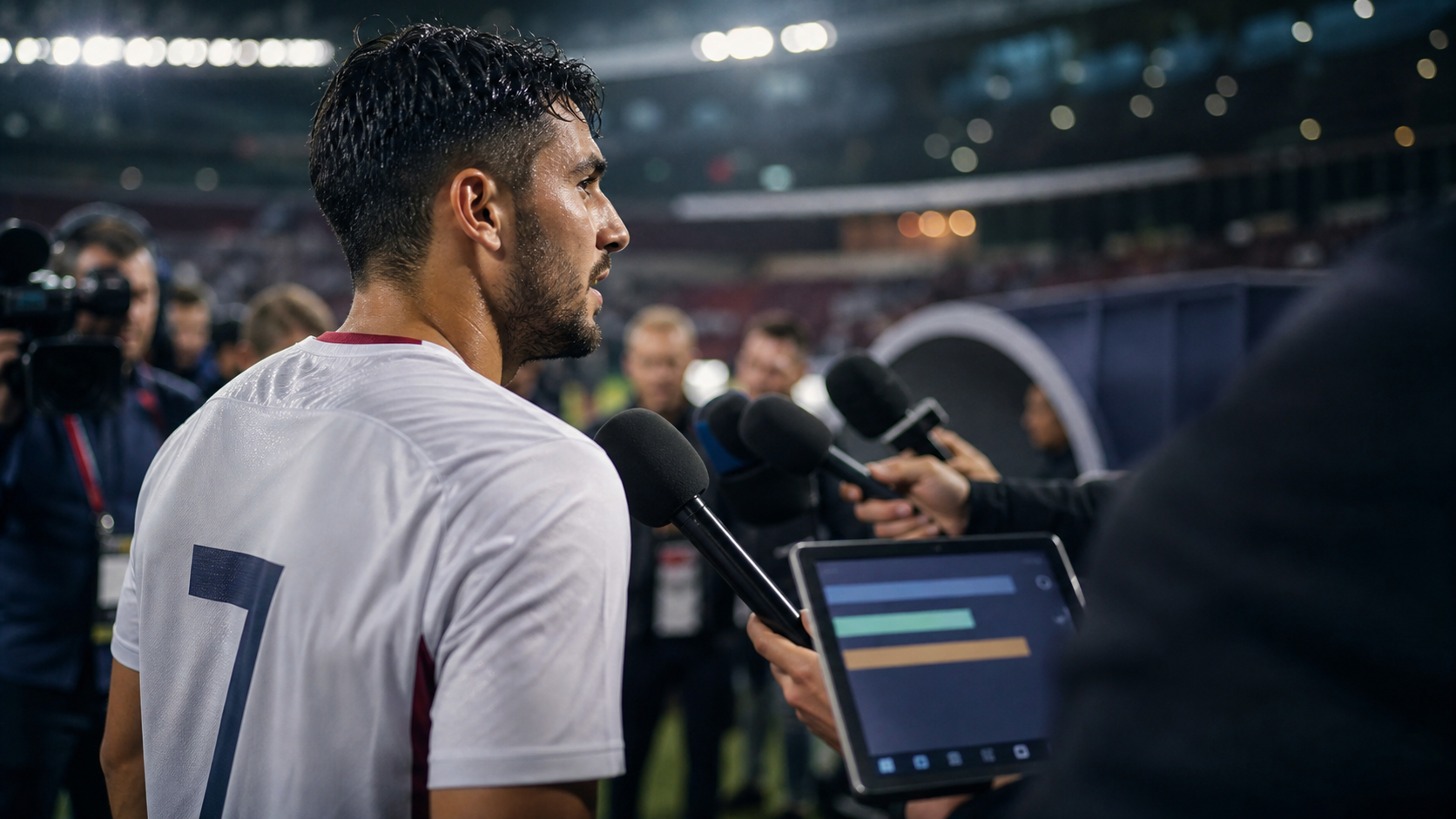
Most fans turn off the broadcast when the final whistle blows.
During the World Cup, that is often the exact moment when the second story begins.
One of the most memorable World Cup lines of the last decade did not come during open play, from a commentator, or from a tactical breakdown.
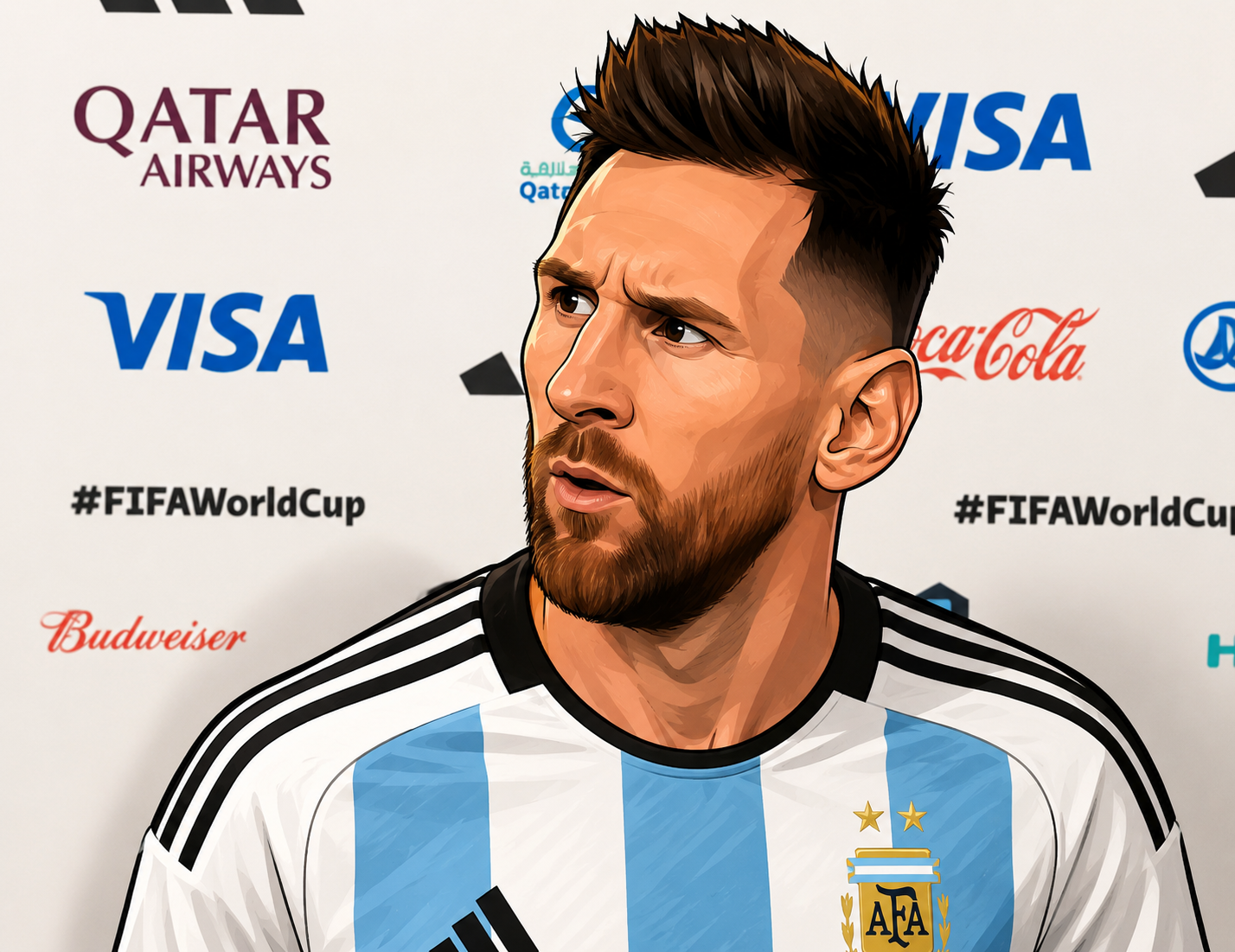
It came in an interview area, when Lionel Messi looked off camera and said, “¿Qué mirás, bobo?”
That is why World Cup post-match interviews are worth translating.
The score tells you what happened.
The interview tells you what it meant.
I learned this the slightly embarrassing way: by watching a clip everyone else seemed to understand, laughing at the reaction in the comments, and then realizing I had missed the actual sentence that made the clip travel. A highlight can survive without subtitles. A post-match answer cannot.
Why post-match interviews matter during the World Cup
A World Cup match has an official ending. The whistle blows, the scoreline freezes, the table updates, and the highlights begin.
But the meaning of the match often keeps moving after that.
Post-match interviews show how players and coaches are processing pressure in real time. A 0-0 draw can sound like a disaster in the comments, but a coach may frame it as a test of patience. A 4-0 win can look simple on the scoreboard, but the most shared moment may be a player’s response to criticism. A tense knockout match can become part of World Cup culture because of one sentence in the mixed zone.
That is the real value of player interviews, coach press conferences, mixed-zone clips, and social media responses. They turn the result into a human story.
For fans who follow the tournament across languages, post-match interviews also create a practical problem. The most interesting clip might be in Spanish, English, French, Portuguese, Arabic, Japanese, or another language. A summary helps, but it usually strips away the part that made the clip worth watching: tone, pressure, timing, and emotional context.
Case 1: Spain’s draw, criticism, and Yamal’s “I’m here”

Spain’s early 2026 World Cup story is a good reminder that a match does not end with the box score.
After Spain opened with a 0-0 draw against Cape Verde, the reaction around the team changed quickly. The result created doubts, not because one draw decides a tournament, but because World Cup expectations are impatient. For a side expected to control games, a scoreless opener becomes more than a result. It becomes a question.
That is where Luis de la Fuente’s post-match and pre-match messaging mattered. The point was not that Spain needed a dramatic speech. The point was that the coach had to explain how the team would live with criticism without abandoning its way of playing. That kind of answer is not a highlight. It is not a stat. It is a pressure reading.
Then Spain beat Saudi Arabia 4-0, and the conversation changed again.
Lamine Yamal scored, and after Saudi fans had taunted with “Where is Yamal?”, his short social media response was simple: “I’m here.”
That is not a tactical breakdown. It is not a full interview. It is not even a long quote. But it shows why post-match expression travels so easily during the World Cup. A young star does not need a paragraph to change the mood around a match. Sometimes two words become the clip.
The real story is not “Spain drew 0-0, then won 4-0.” That is only the surface. The deeper content is how the same team moved from doubt to response, and how the words after the match gave fans a second layer to watch.
This is also why football interview translation matters. If you only read the scoreline, you miss the pressure. If you only read a recap, you may miss why one coach answer or one player response became the thing everyone shared.
Case 2: Why Messi’s “¿Qué mirás, bobo?” still lives online
The 2022 World Cup quarter-final between Argentina and the Netherlands is remembered for many football reasons, but one of its most replayed cultural moments happened after the match.
In the interview area, Lionel Messi said “¿Qué mirás, bobo?”
That short line became a World Cup memory far beyond Spanish-speaking fans. Many people who did not watch the full match still saw the clip. Some understood the Spanish immediately. Others learned it through subtitles, translations, memes, and loose local renderings such as “What are you looking at, fool?” or “What are you staring at, dummy?”
The point is not to turn the moment into gossip or a shouting match. The point is that the sentence carried tone, tension, cultural texture, and timing. A plain match report cannot fully explain why people kept repeating it.
That is the strange power of post-match interviews. The line is short, but the context is not. To understand it, you need to know that it happened after an emotional match, in a noisy interview zone, with the player still inside the pressure of the night.
Ordinary summaries flatten that kind of moment. Translation helps only when it keeps the viewer close to the original clip: the voice, the pause, the face, the discomfort, the suddenness.
What gets lost when post-match interviews are only summarized
Summaries are useful when you need the facts quickly. They are less useful when the meaning depends on delivery.
Post-match interviews are full of things that do not travel cleanly in a short recap:
tone;
sarcasm;
defensive phrasing;
pressure;
jokes;
emotional fatigue;
cultural references;
football slang;
clipped answers;
the difference between confidence and irritation.
That difference matters. A coach can say a team is calm while sounding anything but calm. A player can answer politely while making it clear they heard the criticism. A joke can become a headline if the translation misses that it was a joke. A phrase can feel harmless in one language and much sharper in another.
This is why I do not think fans should rely only on quote cards when a post-match clip is available. A quote card tells you the words someone selected. The original interview tells you how the answer lived in the room.
What types of World Cup interviews are worth translating
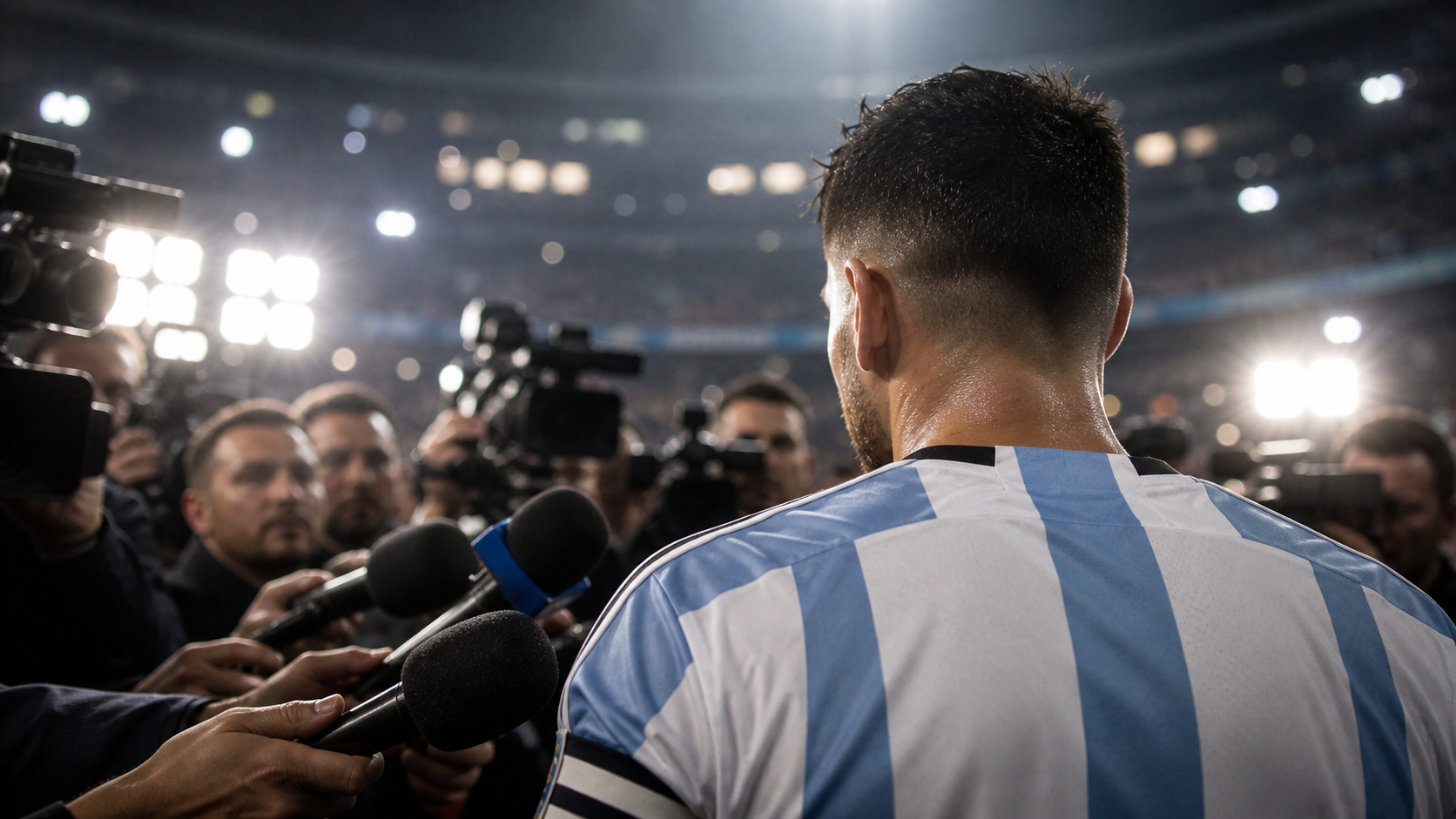
Not every post-match clip deserves a full translation. Some answers are routine. Some are already subtitled well. Some are better left as quick context.
But several types of World Cup content become much more useful when translated:
player flash interviews right after the whistle;
coach press conferences after surprise results;
mixed-zone clips where players speak more casually;
short social media responses that change the conversation;
local media interviews from the team’s home country;
fan-facing short clips on YouTube, TikTok, Instagram, or X.
The best candidates are not always the longest videos. They are the clips where the words explain the feeling around the match.
Related reading
Best Tools for Adding Subtitles to World Cup Highlights
AI Sports Video Translation Guide
The Spanish commentary article connects most closely with this piece because both focus on how World Cup clips travel through tone, language, and emotion. The broader viewing guide is the pillar article for commentary, interviews, highlights, fan reactions, and international analysis.
How AI translation helps fans understand the moment
AI translation for football videos is most useful when you treat it as a first layer of understanding, not as the final authority on every phrase.
For World Cup post-match interviews, translated subtitles help you follow the full answer before you decide what matters. You can understand the setup, the question, the response, and the emotional direction of the clip. That is much better than guessing from a caption, a fan post, or one isolated translated quote.
At the same time, AI translation has limits. Names need checking. Football terms need checking. Slang needs checking. Jokes, double meanings, sarcasm, and emotional phrasing can be fragile. If you are publishing analysis, quoting a player, or using a clip in a creator workflow, human review still matters.
The goal is not to replace a professional translator. The goal is to avoid being locked out of the original moment just because the interview is in another language.
How to Translate World Cup Post-Match Interviews with TranslateSub
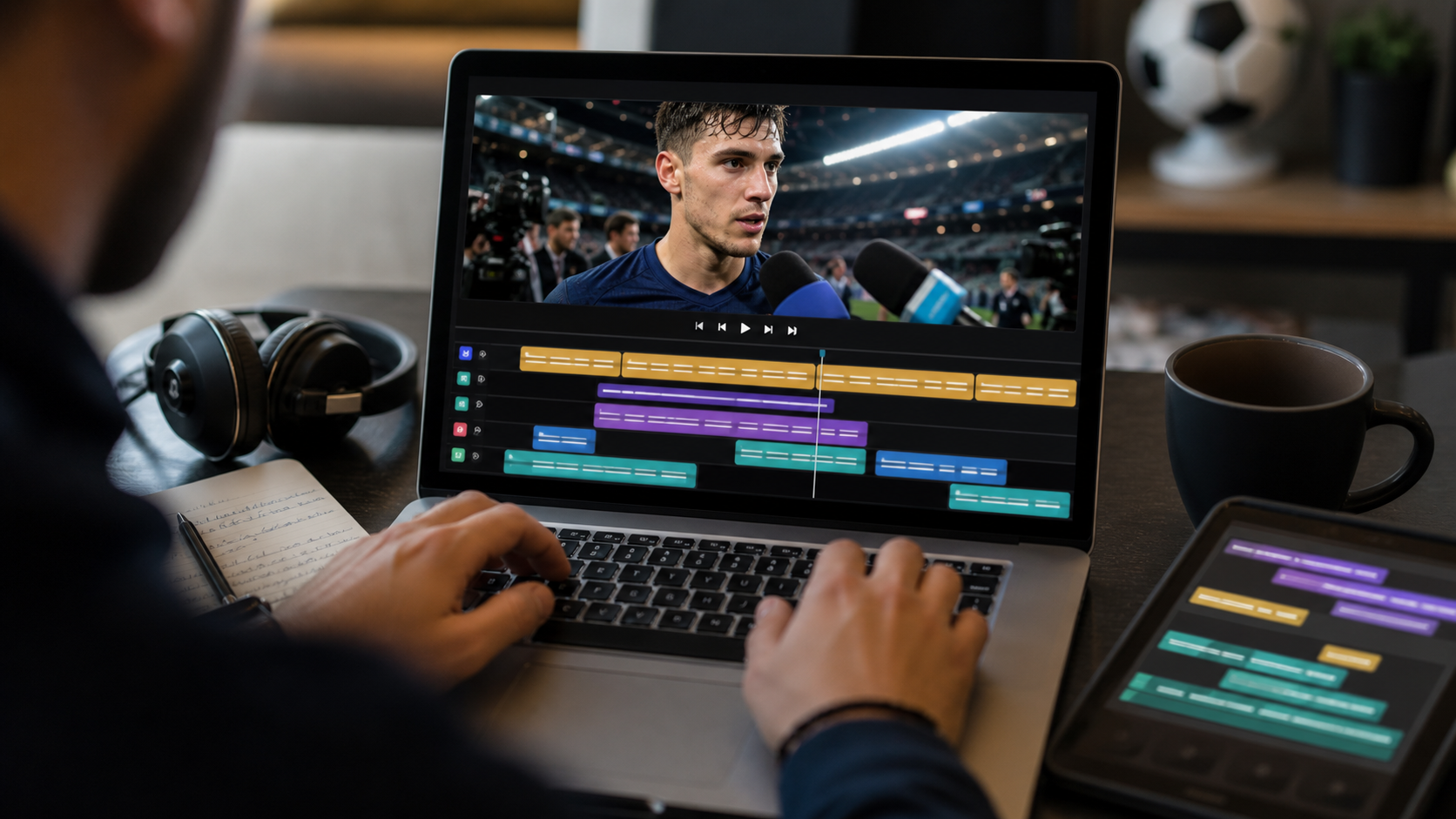
TranslateSub fits best when you have a clip you are allowed to process: your own video, an authorized file, a public clip that the platform permits you to use, or research material within your workflow. It should not be treated as a promise that every copyrighted broadcast or live feed can be translated or reused freely.
Here is a practical workflow:
Start with a post-match interview clip you have permission to process.
Upload or import the interview clip into TranslateSub.
Detect the source language automatically, or select it manually if the clip is noisy.
Choose the target language you want to read.
Generate translated subtitles.
Review player names, coach names, club names, football terms, slang, and emotional phrasing.
Use the translated version for understanding, research, recap writing, or your creator workflow.
For casual fans, this can be enough to understand why a clip is spreading. For sports creators, it can help decide whether a mixed-zone answer is worth saving, checking, and turning into analysis. For bilingual households or international fan groups, it can make a short interview easier to discuss together.
Just keep the standard realistic: translated subtitles can help you understand the moment faster, but they do not perfectly preserve every shade of voice, irony, or cultural context.
FAQ
Why should fans translate World Cup post-match interviews?
Fans should translate World Cup post-match interviews when the clip explains the emotional meaning of a match better than the scoreline. A result tells you who won, drew, or lost. An interview can show whether a coach is calm, whether a player feels pressure, whether criticism has landed, or whether a short answer is about to become part of the tournament’s culture. Translation is especially useful when the most important clip comes from local media or a player’s own language. TranslateSub can help create a translated subtitle layer so you can understand the answer before deciding whether the clip deserves more attention, saving, or deeper manual review.
Can AI translation understand player interviews accurately?
AI translation can usually help you understand the main idea of player interviews, especially when the audio is clear and the speaker uses direct language. It is less reliable with crowd noise, slang, jokes, irony, regional expressions, and football-specific shorthand. That matters because post-match interviews often depend on tone as much as words. A good workflow is to use AI translation for first-pass understanding, then manually check names, key phrases, emotional wording, and any quote you plan to publish. TranslateSub is useful in that first-pass stage because subtitles let you review the whole answer instead of relying on one summary, but important quotes still deserve human verification.
What types of World Cup interviews are worth translating?
The interviews most worth translating are the ones that explain the feeling around the result: player flash interviews, coach press conferences after pressure matches, mixed-zone clips, local media interviews, and short social media responses that shift the conversation. These clips are useful for fans who want context and for creators building research notes, recaps, newsletters, or video scripts. TranslateSub can help turn those clips into AI subtitles for first-pass understanding, but any names, slang, football terms, emotional phrasing, or quotes used publicly should still be reviewed by a person.
Are post-match interviews better for translation than live commentary?
Post-match interviews are often easier to translate than live commentary because the speech is usually slower, more structured, and less overloaded with simultaneous crowd noise. They are also valuable because one answer can explain the pressure behind the match. Live commentary is still worth translating when you want the atmosphere of a goal, a missed chance, or a surprise result, but it can be faster, louder, and more idiomatic. For many fans, the best order is simple: use AI translation on the post-match interview first to understand the story, then translate commentary clips if the emotional call itself becomes part of the moment.
Can sports creators use translated interviews in their workflow?
Sports creators can use translated interviews as a research and planning layer, but they should be careful with rights, context, and quotation accuracy. A translated subtitle draft can help identify which answer is useful for a recap, short analysis, newsletter, or video script. It can also help compare local media framing with international coverage. But creators should avoid assuming they can reuse any copyrighted clip freely, and they should manually verify any quote that becomes central to their work. TranslateSub can support that workflow by making the original interview easier to review, timestamp, and understand before the creator decides what is safe and worth using.
The Score Tells You What Happened. The Interview Tells You What It Meant.
The next time a World Cup interview clip appears in your feed, do not skip it just because it is in another language.
A short post-match answer can explain the pressure, the emotion, and the story behind the result.
Use the TranslateSub Chrome Extension to translate World Cup post-match interviews, understand the context, and decide what is worth saving, sharing, or turning into your own analysis.